
This One Started Before We Ever Reached Fort Myers
A pool cage this size doesn't begin when the first wall goes up. It begins with measurements, layout, cuts, mock-ups and figuring out how a pile of aluminum is going to become one complete enclosure.
For this project, Danny worked through the design ahead of time, built sample connections and prefabricated portions of the enclosure before the crew headed to the job. The enclosure had an L-shaped layout with larger and smaller sections, so getting the pieces organized before installation mattered.
And because this is a real job — not a perfect showroom demonstration — the video also shows the part people usually edit out: something in the original layout needed to be changed before installation. The design was adjusted, the pieces were mocked up again, and the job moved forward.
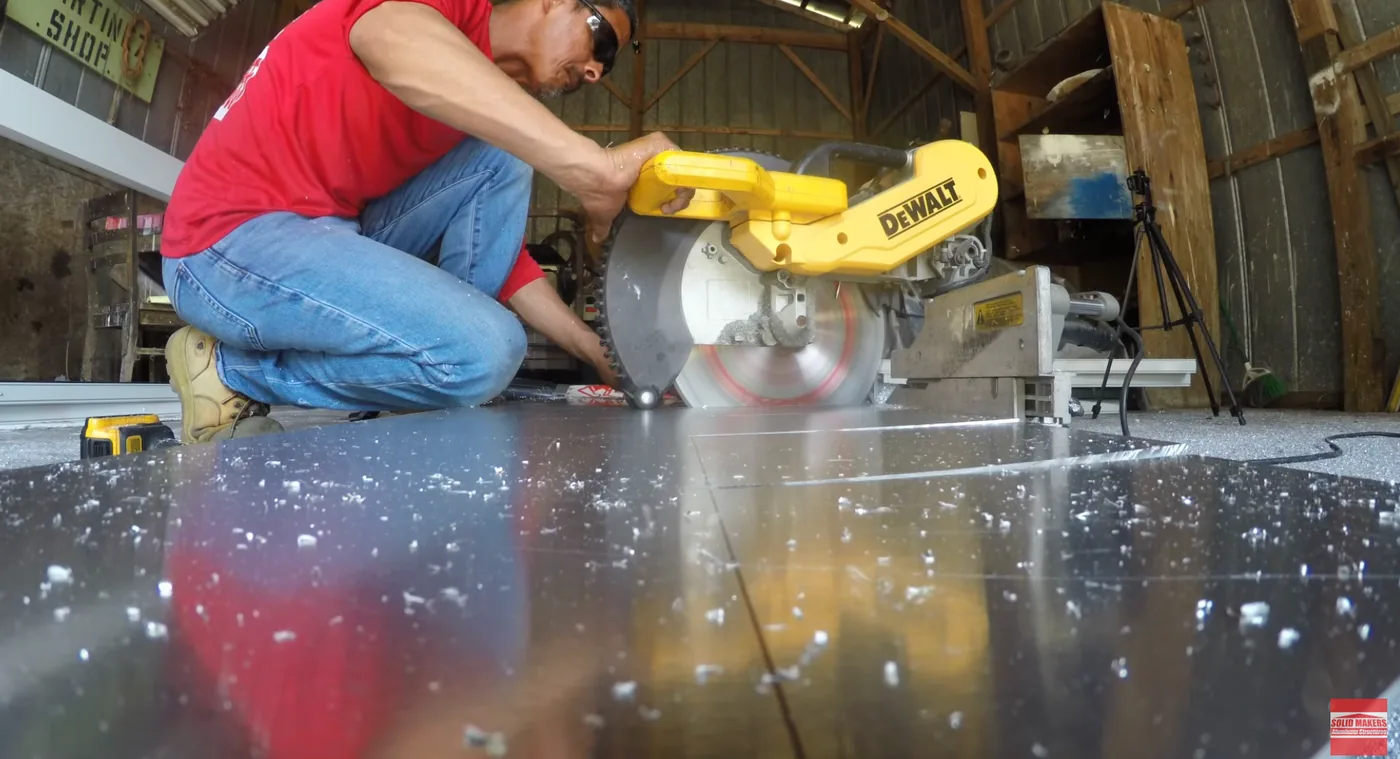
How a Pool Screen Enclosure Starts Coming Together
Once the crew arrived in Fort Myers, the job moved from planning to assembly. Some components had already been cut, but plenty of fabrication still had to happen on site. The crew installed a 7-inch super gutter, assembled the rafters, built the wall sections and began tying the structure together.
The video gets into the details most homeowners never see after a cage is finished: the beam connections, gusset plates, fasteners, overlaps, wall layout and the sequence required to get a large aluminum structure standing where it belongs.
The Three-Inch Problem
Then came one of those moments contractors know too well. Several wall sections had been cut about three inches too tall.
That meant recutting the walls while the clock was already working against the crew. Uneven concrete and steps around the pool created additional adjustments, and one beam had to come back down after a piece was installed in the wrong location.
None of that makes for a neat little “three easy steps” construction video. It does make for a much better look at how pool screen enclosures are actually built. Measurements change. Site conditions matter. Problems show up. Then you solve them and keep moving.
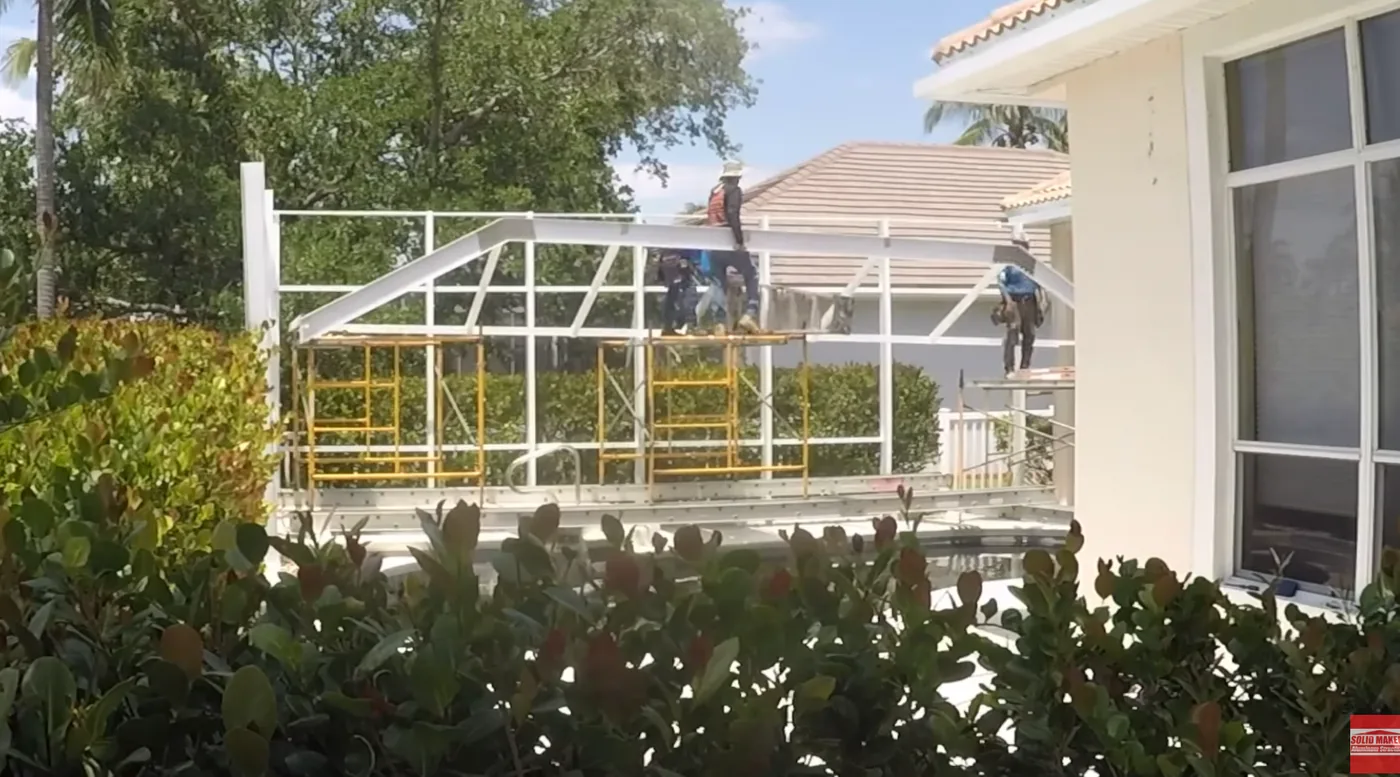
Walls Up. Rafters Up. Now It Finally Looks Like a Pool Cage.
After the recuts and adjustments, the walls started standing and the rafters began filling in the roof. That's the point in a build when all the individual pieces finally start making sense.
The enclosure used substantial structural members, including 2x7 and 2x8 aluminum members in areas shown in the video, along with 20-inch gusset plates that Danny described as 1/4-inch thick. Stainless fasteners, corner plates and the connection into the super gutter were also part of the build.
Then Comes the Screen — and the Crew Commentary
Once enough of the structure was together, screening could begin. Renato worked through the screen panels while the rest of the crew handled framing, fasteners, details and cleanup.
If you're expecting a silent training video with everybody pretending construction is peaceful, this isn't that video. There are tired guys, tool debates, jokes about Human Resources, coffee well past breakfast time, somebody threatening to call Morgan & Morgan, and a crew that had officially spent more time on this cage than anybody wanted.
That's part of why this project is worth watching. You can see the work, but you can also see the people doing it.
A Pool Screen Enclosure That Fought Back
Danny says it more than once in the video: this pool cage fought the crew almost the entire way.
It took longer than expected. There were recuts. There were site conditions to work around. There were mistakes that had to be corrected. By the final day, everybody was ready to see the last screen panel and the last piece of cleanup behind them.
But the difficult part is exactly what makes the finished enclosure more interesting. You don't just see an after photo. You can watch roughly thirty minutes of the decisions, fabrication, assembly, corrections and crew work that led to it.
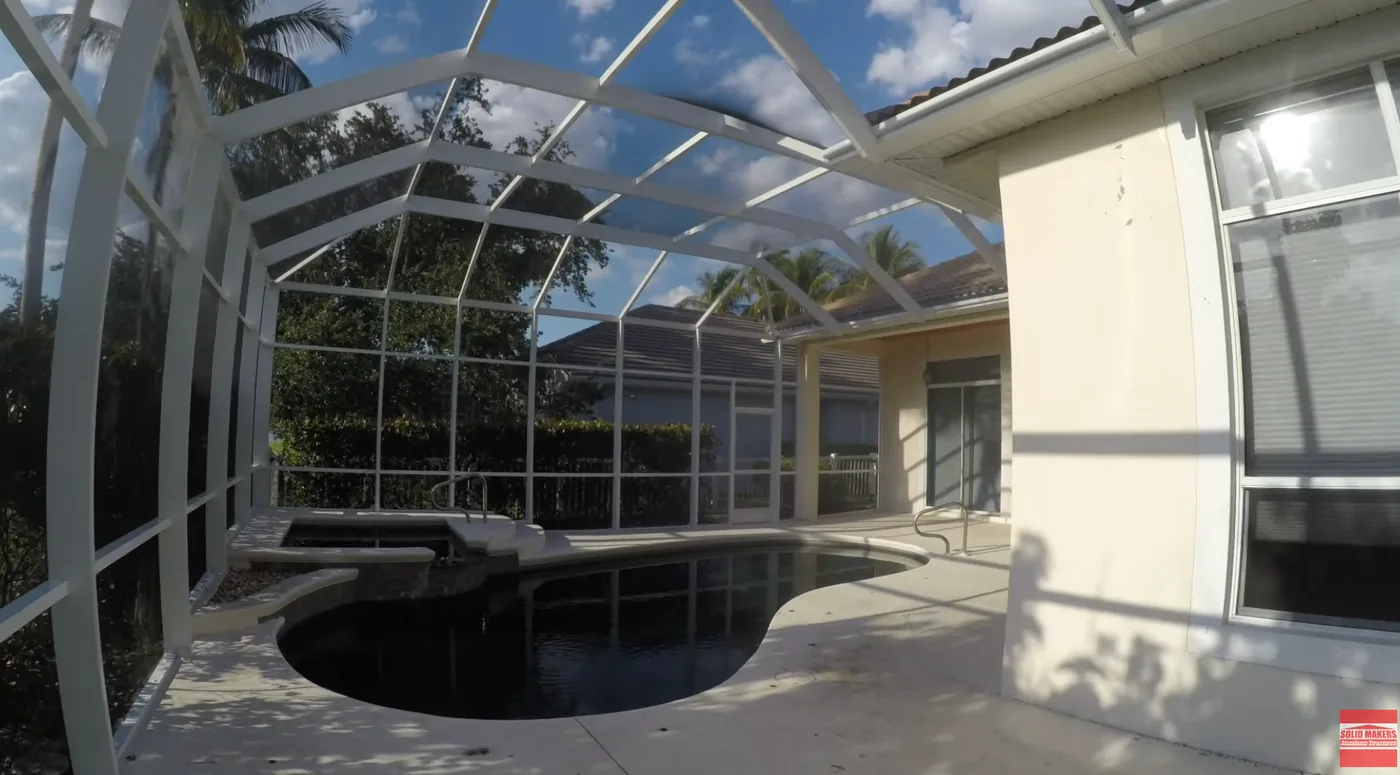
The Finished Fort Myers Pool Screen Enclosure
By the end of the project, what started as measurements, loose aluminum, gusset plates and piles of parts had become a complete screened pool enclosure around the homeowner's pool.
Danny described this one as a job that tested him and took longer than usual, especially because it had been a while since he had built an enclosure of this size. But he also called it a great experience — and the finished cage is the payoff.
For homeowners, that's the real purpose of these Project Spotlights. Instead of asking you to take our word for what we build, we show you the job.
Trying to Learn How Pool Screen Enclosures Are Built?
If you landed here because you searched something like how to build a pool screen enclosure, how pool cages are built in Florida or pool screen enclosure installation, the video above gives you a real-world look at the process on an actual Fort Myers project.
It is not an engineering plan or a substitute for project-specific permitting, code requirements or structural design. Pool enclosures have to be built for the conditions and requirements that apply to the actual property. What this project does give you is a transparent look at the sequence, fabrication, assembly and problem-solving involved in building one.
Pool Screen Enclosure Construction in Southwest Florida
Solid Makers Aluminum Structures builds and repairs aluminum structures throughout Southwest Florida. If you're considering a new pool screen enclosure, screen lanai, enclosure repair or an existing pool cage project, you can see more real Solid Makers work throughout our website and YouTube channel.
Already have a pool cage that needs new screen? Visit our Fort Myers pool cage rescreen page for information on rescreening existing enclosures.
Fort Myers Pool Screen Enclosure Questions
Is a pool screen enclosure the same thing as a pool cage?
In Florida, homeowners commonly use “pool cage” and “pool screen enclosure” to describe the aluminum-framed screened structure surrounding a swimming pool or pool deck.
Was this a new pool enclosure or a rescreen?
This was a new pool screen enclosure built from the ground up in Fort Myers. The video follows the project from planning and fabrication through framing, screening and final cleanup.
Why was some of the enclosure prefabricated before arriving at the job?
Prefabricating and mocking up pieces ahead of time can reduce the amount of figuring and assembly required once the whole crew is on the jobsite. For this project, some pieces were prepared beforehand while other fabrication happened on site.
What size super gutter was used on this project?
The project video shows the crew installing a 7-inch super gutter as part of the pool enclosure build.
Can I use this video as plans to build my own pool enclosure?
No. The video is a real-project walkthrough, not a set of engineered plans. Enclosure dimensions, spans, attachments, permitting and structural requirements can vary by property and jurisdiction.
Planning a Pool Screen Enclosure?
Want to talk about a pool cage, screen enclosure, lanai or aluminum project in Southwest Florida? Call Solid Makers Aluminum Structures and show us what you're working with.
Call 239-370-8055