
The LaBelle Gutter Project
The crew arrived in LaBelle with the gutter machine and materials ready to fabricate each run for the house. The existing gutters were removed first, then the new system was measured section by section so the corners, outlets and downspouts could be laid out for the actual roof.
Some of the measured runs included approximately 21 feet 4 inches and 32 feet 10 inches, along with inside and outside corners. Instead of piecing together short stock sections, the seamless runs were formed on site to the measurements needed for the home.
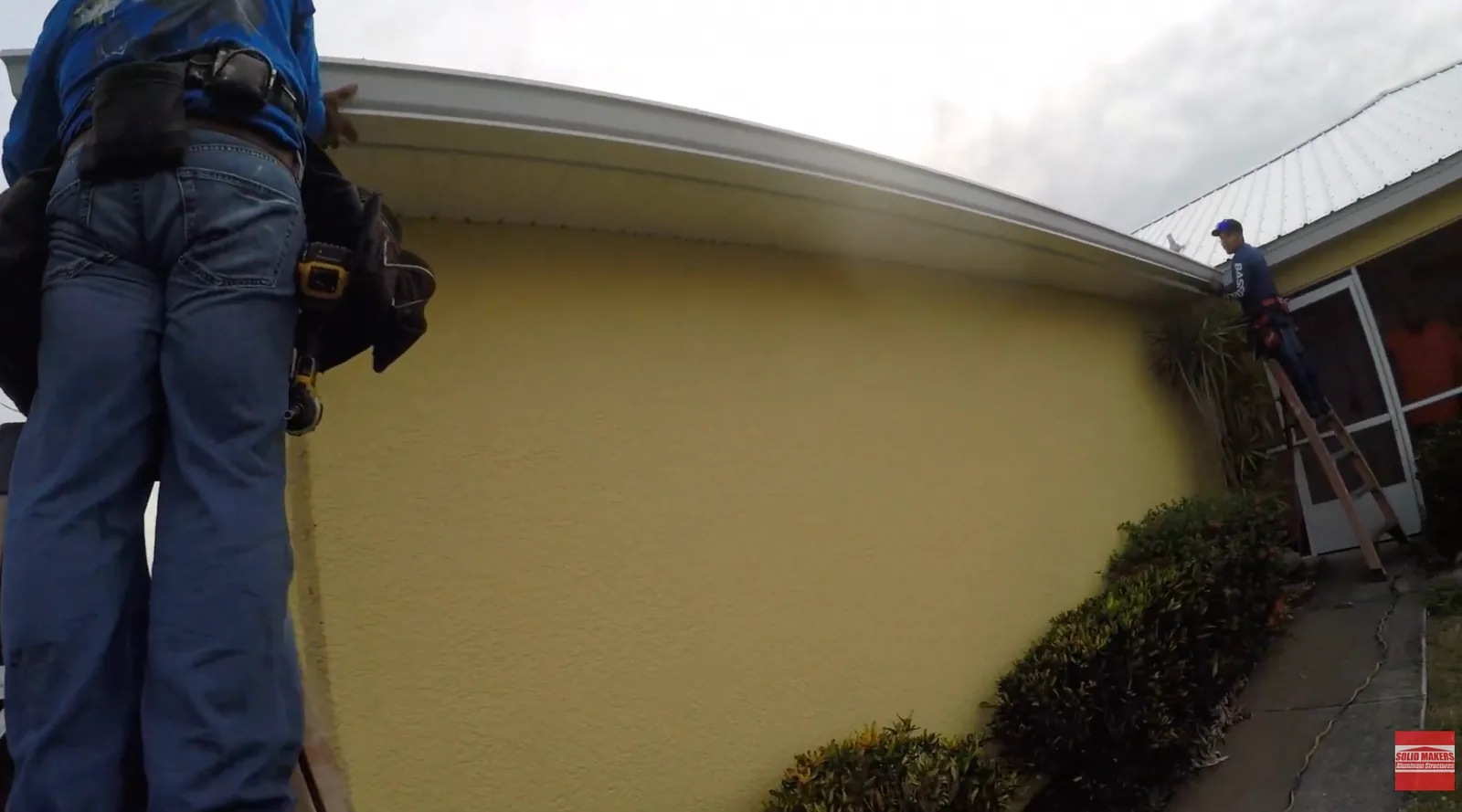
Angled Fascia Required Gutter Wedges
One of the important details on this home was the angled fascia. When fascia is not vertical, the gutter cannot simply be fastened against it and expected to sit correctly. Wedges were used behind the gutter where needed to support the system and maintain the proper installation angle.
Pitching the Gutters Toward the Downspouts
Seamless does not automatically mean properly installed. Each run still needs to be planned so water moves toward the intended outlet instead of sitting in the gutter. Downspout locations, roof layout and the direction of each run all affect how the system drains.
This project included multiple downspouts around the home, including an area where the roof geometry created a small drop that needed its own drainage consideration.
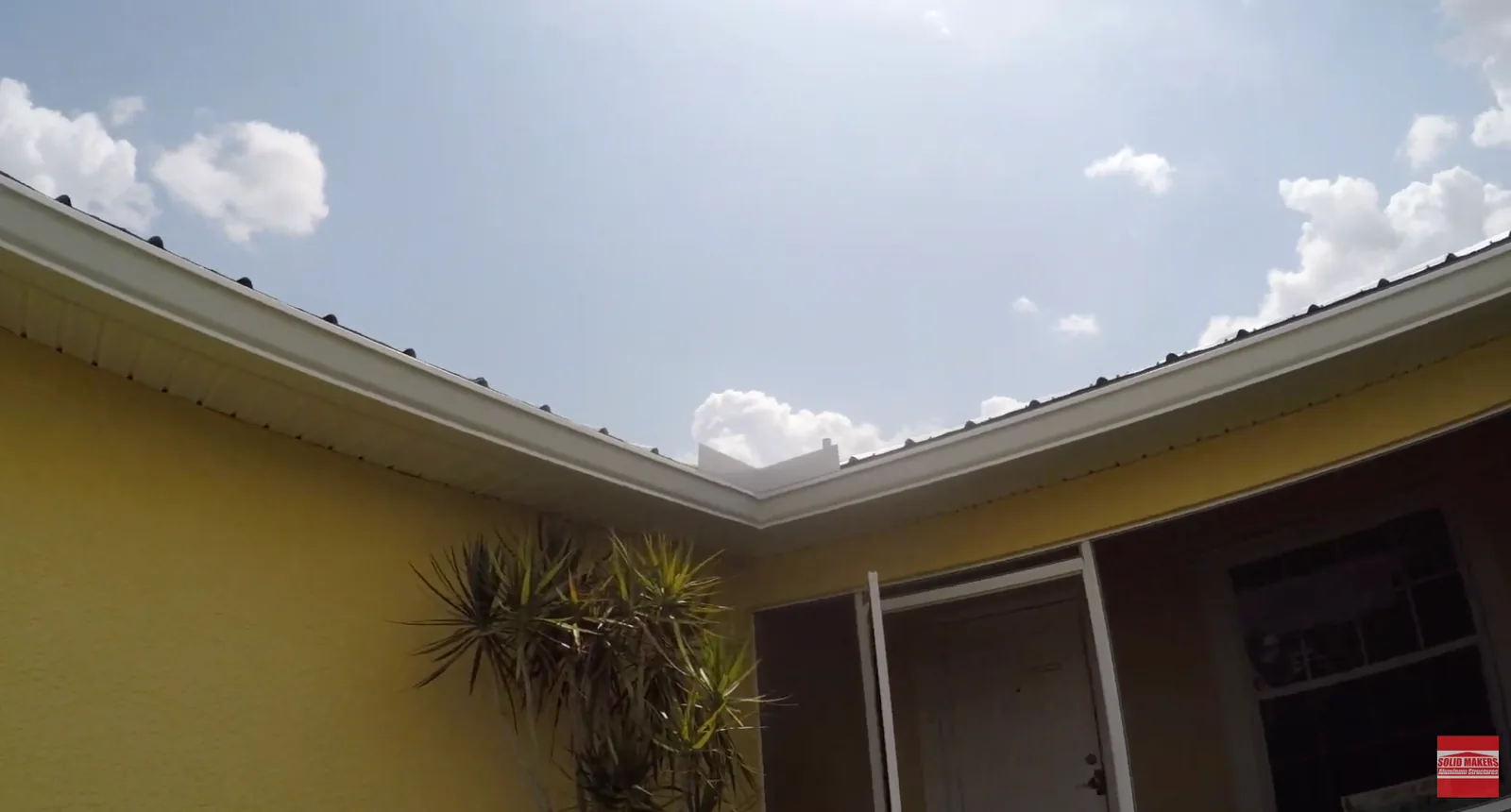
Custom Water Stoppers at the Roof Valleys
The inside corners were especially important because roof valleys can concentrate a large amount of water into one location. During heavy Florida rain, that water can move fast enough to jump over the front of a gutter if the corner is not prepared for it.
For those locations, custom water stoppers were fabricated from gutter material and installed at the inside corners. Their job is simple: interrupt the fast-moving valley water and help direct it down into the gutter instead of allowing it to overshoot the system.
Sealing the Gutter Corners
The project also used miter strips at the gutter corners. There are several ways installers can build corners, but on this type of installation we prefer the miter-strip method because it produces a clean connection without adding unnecessary fabrication time.
The corner connections were riveted and sealed so the system could direct water through the runs and into the downspouts without relying on appearance alone.
A Small Screen Repair Along the Way
While the gutter work was underway, the crew also handled a small screen repair at the property. One panel had previously been installed with round spline where the frame required flat spline, which contributed to the screen pulling loose. The correct flat spline was used during the repair.
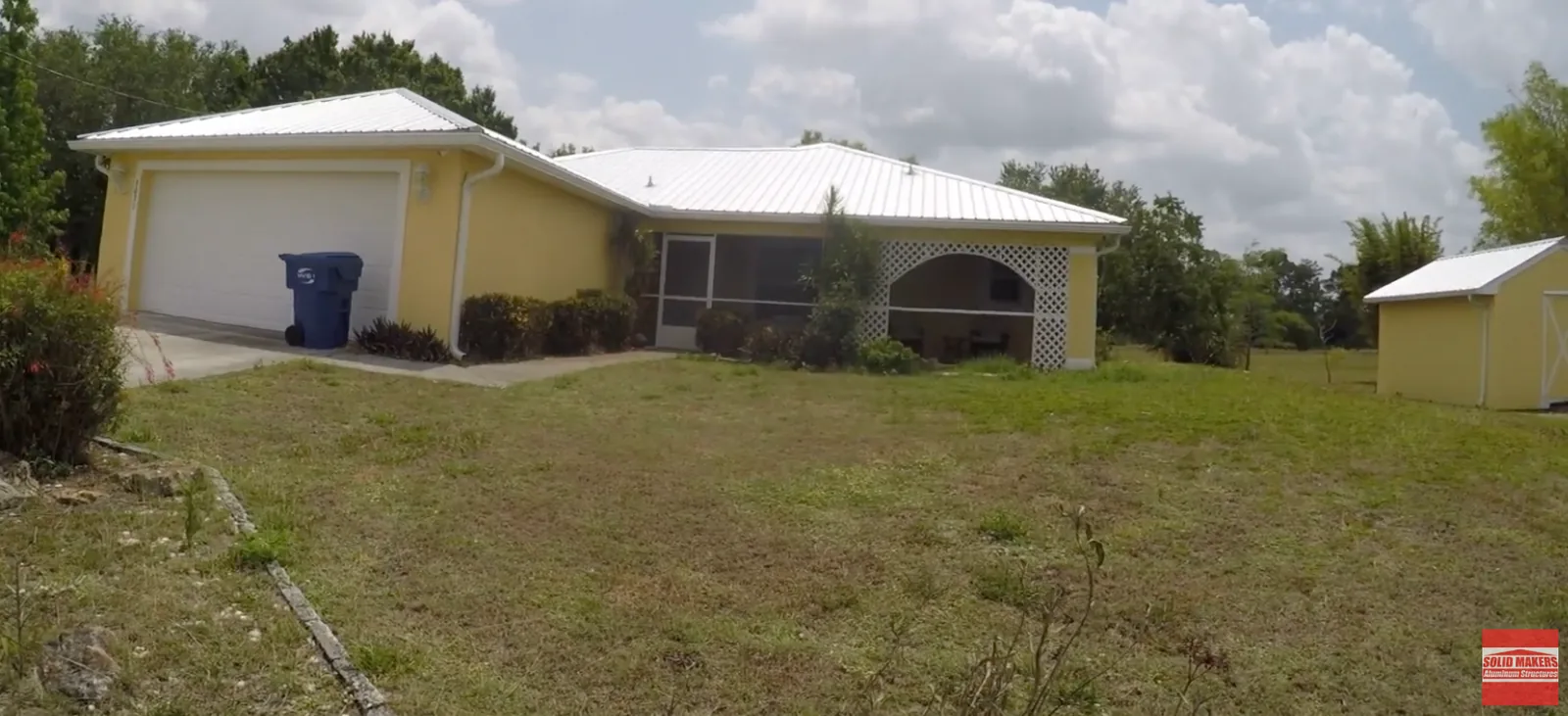
The Finished Seamless Gutter Installation
By the end of the project, the new gutter system ran around the required sections of the home with the downspouts, inside corners and water-control details in place. The homeowner was happy with the finished installation, and this was not the first project Solid Makers had completed at the property.
For us, that repeat-customer relationship is part of the story. We had previously completed screen work at this LaBelle home and were invited back for the gutter project.
Project FAQs
Why are wedges used behind gutters on angled fascia?
Wedges help support and position the gutter correctly when the fascia board is angled rather than vertical.
Why does the direction or pitch of a gutter matter?
The run needs to move water toward its intended outlet and downspout. Poor drainage layout can leave water sitting in the gutter or moving toward the wrong location.
Why install water stoppers at roof valleys?
Valleys concentrate rainwater. A water stopper helps prevent fast-moving runoff from overshooting the gutter at an inside corner.
Does Solid Makers install seamless gutters in LaBelle?
Yes. This page documents a real seamless gutter installation completed by Solid Makers Aluminum Structures in LaBelle, Florida.